Ballad Analysis · Blog Post · Folk Music

No Politics Please, We’re Folk Singers

A large number of the folk songs I collect and record for YouTube are political in nature. Whether they are bemoaning the unfair life of a coal miner in the 1800s, a dam builder in Scotland in the 1950’s or a conscripted soldier in the Napoleonic wars, the political theme is clear. There are others that take a more philosophical approach and advocate or denounce a particular political view, Alastair Hulett’s, Dictatorship of Capital is a good example, as was the thieving of My Love’s in Germany by Robert Burns to make a point about Jacobites.

I knew about Bob Dylan from a young age, mostly because my parents followed him into his Pentecostal Christian phase. I think the 2007 biographical movie I’m Not There did a fantastic job of showing Dylan’s immense capacity to change his image to fit the times, and probably fit his interests as an artist. As I looked into Dylan later in life, I noticed his distinct move from folk Messiah to electric narcissist rocker. When I was in New York in 2014, I spent some time walking through Greenwich village pondering what went down there in the 1960’s. I tried to imagine what was going through the minds of Joan Baez, Pete Seeger and Dave Van Ronk as they witnessed Dylan’s chameleon act.

Someone who was every bit the 60’s folk musician that Dylan was, but never made it through the 1970’s was Phil Ochs. It took me much longer to learn about Phil as he died the year I was born and his work largely fell from view as Dylan’s flourished. I mention Ochs and Dylan in the context of this article because I wonder whether these two can be looked at in terms of the true believer and the salesman. Was it Ochs’ status as a true believer that caused his breakdown when the perceived wave of socialism, freedom and equality fell flat? And is there an argument to be made about the quality of each as a person? Do we care if our artists genuinely believe what they sing, write or paint?

I write songs about things that I care about. I have written about the treatment of refugees by Australia, the horse racing industry, a local road that claims a few lives each year and the lack gender equality in our society. I have also written a number of songs about the banning and subsequent imprisonment, torture and execution of Falun Gong adherents in China since 1999. This subject is close to me as I learned this peaceful meditation and exercise system myself in 1998. I knew first hand that the global propaganda campaign run by the Chinese Communist Party was a lie. It has taken 16 years, but most governments of the western world have now acknowledged this. My most recently published song, Spring Comes, highlights the stories of a handful of people caught up in this saga.

For me, folk music is a way to share what we have seen and experienced with other humans. In sharing we seek a mirror, a nod of understanding, a smile or even a tear. It is disconcerting to think that some on the other side of the microphone might not necessarily be sincere in their sentiment.

I do know, and have met, many folk musicians who are sincere about what they sing. They sing not just to record, but also to influence. The story of Alistair Hulett’s efforts to keep a local swimming pool in Glasgow open, as documented here by Gavin Livingstone is just one example. I’m sure we have lost many like Phil Ochs when advocacy fails, but I cannot resign myself to the idea that we should stop trying to change the world for the better through song.

Blog Post · Folk Music

One Day in a Perfect World

It was probably in 2006 when I first heard Colum Sands play at the National Folk Festival here in Australia. His carefully crafted and insightful song about the troubles in Ireland, Last House in Our Street, was a trigger to collect all of his albums. It was a good investment.

I wasn’t intending to go to the National this year as juggling five young children has made it a challenge. However, when I heard Colum on the radio in the weeks beforehand, promoting the festival, it suddenly became a much more attractive option.

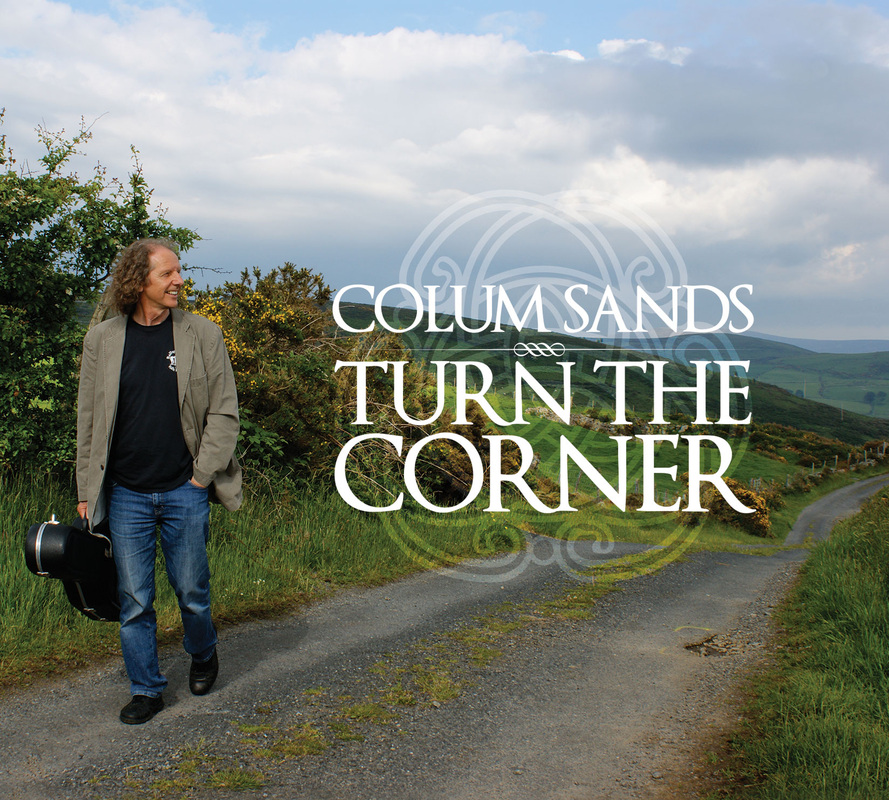
My wife and I and three of our sons (12, 4 and 1) went along for the Friday. Hearing Colum play some songs from his new album along with Buskers and the funny song about the donkey was worth every cent of the ticket. My wife was also brave enough to meet Colum and get the newly purchased copy of Turn the Corner signed.

This post isn’t intended to be a report from our day at the festival, but more about the nature of this particular festival. Every year that I have attended, it has felt like stepping into Diagon Alley. A world where socially conscious people sit and listen to well-crafted music by everyone from the 10yr old with their first ukulele, to masters of the art. People are patient, generous and friendly.

Sometimes the odd ‘normal’ Canberran buys a ticket by accident and can be spotted wandering in a daze, like a muggle at a Quiddich match. I don’t know if this phenomena is common to all folk festivals, I haven’t been to many others but the ones I have been to don’t compare to the National. The slogan for the 50th anniversary, “5 days in a perfect world”, certainly rings true for me.

Despite living in Canberra since 1994, it was not until I was asked to help teach some morning Qi Gong exercises and coordinate a Chinese Dance display in 2006 that I discovered this incredible alternate universe. As one who has dabbled in the magic arts, I do wonder whether it is the concentration of so many people of a certain type, performers, organisers, volunteers and general attendees that creates the otherwise unexplainable vibe.

I’m sure that any one of the performers could put on a great concert, but I doubt if people would walk away with the same feeling that comes from spending some time at the National.

My son lost his Ukulele within the first 15 minutes of being at the festival. On Tuesday I had a phone call from the lost-property folks letting me know that it had been returned. As I said to my wife after my son noticed it was missing, “don’t worry, this is the National, these people don’t steal stuff”.

I should mention a few new performers that we enjoyed listening to. The harmonies provided by the three lads from The Young’uns were superb. It is great to have acts of this calibre come over from the UK and their selection of left-leaning songs was brilliant. I had to record my own version of John Ball, after hearing them perform it.

Co-cheòl also impressed.  Unfortunately the venue (Lyric) was probably half the size of the audience trying to get in. Fortunately my son and I had pre-positioned. With success on their Pozible campaign, they should have a debut album out in the near future. Multi-instrumentalists and with a solid choral background, their songs were heavenly to listen to.

We made sure to catch up with past festival favourites of ours, Cloudstreet and The Roaring Forties who put on a Cicely Fox Smith special that I was very pleased to sing along loudly to. The downside of a single day ticket is that you inevitably miss some performers, so it was a great disappointment to miss the Wheeze and Suck Band and also the Fiddle Chicks.

An important event that didn’t occur until the end of the festival was the presentation to Tony Eardley of the Alistair Hulett social justice songwriting award. You can see Tony’s excellent song “Sally Cross The Water” here. I first heard Tony sing Portugal Beach at the 2008 National and had it stuck in my head for 7 years until I finally met him in the Blue Mountains last year and purchased a copy of his album Desire Lines.

Maybe this feeling is unique to me, but I suspect others feel similarly about this event. It is only sad that every other day is now just one which isn’t spent at the National.

Blog Post · Folk Music · My Own Music

Women’s Day (Men stop being Bastards)

I wrote a song to express my sentiments on Women’s Day this year. I have included the lyrics below:

Women’s Day (by Daniel Kelly, 2016)

You pulled her hair in primary school,
Teased her ‘caus you thought it made you cool,
Laughed at her when she knew more than you

Girls can’t run, girls are weak,
Make them cry, don’t let them speak,
It’s really no surprise how we got here

Chorus:

It’s women’s day, it’s women’s day,
There has to be a better way,
To say the things still in my head
Let’s call it ‘Men don’t be Bastards’ day instead.

Took her on a date when you were fifteen,
Tried to squeeze her into your shallow dreams,
She was never gonna be the one you loved

It’s hard to know how to relate,
When all you’re ever taught is hate,
I wish I hadn’t lived with it so long

Chorus

When the children came, she stayed at home,
No women’s wage could pay those bills,
In a market made by men you’ll never win

They say you can always start again,
But only if you pay the price,
Your family, your dignitary and soul.

Chorus

More than a thousand years to prove,
The truth that we already knew,
There’s nothing that a woman cannot do

I wrote the song reflecting on the strong women I have known during my 39 years, and especially in relation to the treatment of women that I grew up observing as a child in Queensland during the 1980’s. Treatment which, to my shame, I emulated. It was not until I left home at seventeen and was exposed to the work of Tori Amos and a broader range of movies and television that I started to re-think the ideology that I had been raised in.

This blog post is about dissecting the origins of my behaviour and, hopefully, to let women know that there are men in society who value their contribution as complete people, rather than trophies, servants or sex toys. I’m also writing to encourage men to think about their attitudes towards women; where those attitudes come from and whether they are your own or imposed.

Why do we, Crucify ourselves
Every day, I crucify myself
Nothing I do is good enough for you
Crucify myself, Every day
And my heart is sick of being in chains
(crucify, from Little Earthquakes, Tori Amos)

The Little Earthquakes album, released by Tori Amos in 1992, had a magical property for me. It took an arrogant, selfish and condescending young male mind and rubbed my face in a thousand years of women’s suffering. I’m not ashamed to admit that I would often be reduced to a sobbing mess after listening properly to some of the songs on this album.

I’m not for a second suggesting that forcing every 17yr old male to listen to Tori Amos is going to solve the problem of gender imbalance, but for me it was a transcendent experience.

The social experiment, done by fanpage in Italy demonstrated with boys 6 to 11, that the tendency towards violence against women must be developed after this age. I’m not just talking about physical violence here, much of the violence against women is verbal and focused on how they look, how they feel and express feelings or how their interests and skills are trivial. Excluding someone from opportunity in society on the basis of their sex is violence.

The lyrics in the song above are all biographical. There were many beautiful young girls in my classes during school that I would tease relentlessly. Not playful teasing, but cruel verbal abuse. Even in my first years of university I would ridicule girls that social norms labelled overweight or unattractive. Girls who were considered attractive would be assumed to be sexually available and subject to a different form of abuse. How had society instilled such a shallow value system in me? I guess I could blame the fact that every storybook, television advertisement, movie and sitcom I was exposed to had the male hero exclusively pursuing a certain type of willing, beautiful, girl whose main purpose was to gush over said hero and fall helplessly into his arms. In my defence, I do not believe that very many young boys could resist an onslaught of this type if it is not countered by an alternate view in the adults and other children they are exposed to. This does not in any way excuse my behaviour or change the harm that was caused.

By the time I was finishing high-school, I ended up inviting a girl to the school formal that I had barely said five words to. My interest purely stemming from the fact that she looked like a singer who I had become infatuated with. As expected, things did not go well, and I was left confused when life did not imitate what I had seen on television and read in books.

I am angry at the way in which this attitude towards women sits at the core of Australian society. Unless a women chooses to forgo having children and is willing to endure harassment, it is unlikely that she will rise very far within her profession. This is evidenced by the average 18% pay gap [i] and means that when selecting top scientists, top doctors, top lawmakers, we are excluding between 5-15% of the available population, purely based on an antiquated idea that men are superior.

Other nations have moved on, providing in-workplace child care, flexible work arrangements and paternal leave. There is no logical reason for this absurd situation, yet in every field that women have fought to become part of, they have faced, and still face, a mountain of resistance.

If anything, celebrating Women’s Day in Australia is really just pointing to our failure. I encourage you to read the story of Rosmary Folett, the first female chief minister in the Australian Capital Territory. It is a story of triumph; her succeeding in doing a job she was highly qualified to do despite a wall of male ignorance and prejudice. However, the point is that she should not have had to, and how much better could she have done if time had not been wasted combating said prejudice? Enough is enough, it is time for balance to be returned.

He said you’re really an ugly girl
But I like the way you play
And I died
But I thanked him
Can you believe that
Sick, sick, holding on to his picture
Dressing up every day
I wanna smash the faces of those beautiful boys
Those Christian boys
So you can made me come
That doesn’t make you Jesus

(Precious Things, from Little Earthquakes, Tory Amos)

[i] https://en.wikipedia.org/wiki/Gender_pay_gap_in_Australia

Ballad Analysis · Blog Post · Folk Music

Who Gets a Song?

What is the relationship between a folk song and its genesis? How important is it to the worth of a song that there is a personal connection of some sort between the author, subject and audience? It could be argued that ever since the popularisation of the broadsheet, around 1712, this connection has been broken. With songs copied from one region and spread all over the country (and globe) to be sung by singers to audiences, neither of whom have any tangible connection to the subject matter.

Thinking back to the time of the bards, their songs were closely linked to the living memory of a specific region, clan or tribe. The audience could often trace their lineage to the heroes of a song, or even have eyewitnesses to the events amongst the living population.

We could be sceptical and assume that the bard was the equivalent of Fox News or a Murdoch tabloid, with truth in reporting highly dependent on who is paying their salary (or threatening to kill them). A brief research into the Fili of Ireland would suggest otherwise. It is because of the Fili and Bards of Wales and Scotland that such well preserved stories as those retold in Coll the Storyteller’s Tales of Enchantment or in Padrig Colum’s Treasury of Irish Folklore are still available to us, much as they would have been performed and told 500 years ago. Prior to the introduction of Christianity, the storyteller held a very high place in Celtic society, even at the same level as the chief or king.

This ramble was prompted by my reading of a book that details close to 300 years of linen manufacture in Maghera, Ireland. The book, Linen on the Green, was written by Wallace Clark, my great-great uncle. In the book is a story of one Jackson Clark (1762-1788), who had married the daughter of a local General (James Patterson). Jackson dies after falling from a horse while racing back from work to try and catch his young wife in bed with his uncle. To me, this had the makings of a good folk song, so I wrote one.

This got me thinking, why does the story of a young girl pushed into the river by her elder sister (Twa Sisters), or the tale of a young girl dying for her criminal lover (The Highwayman) warrant selection and perpetuation by society through immortalisation in song. Any folk researcher will know the process of evolution these songs go through, where the town, villain, trade or names get changed for whatever will better connect with a local culture, or serve a particular political agenda. A good example being the Recruited Ploughboy who becomes a Recruited Collier in the time when ploughing has been given over to machines. In some cases we know that the song (or poem), as for The Highwayman, has no link to real events and is purely from the imagination of the author.

So why was it that the death of my great-great-great-great-grandfather was never made into a popular song? Someone who died after riding to his love across the river Annan got a song. Could we assume, like Carl Jung, that there are archetypes of human existence that are frames upon which a particular folk song will stick because they align with these sub-conscious memes? Is this why many millions of other stories and the songs written about them fade into oblivion? Or instead, is it the writers of songs and poems that shape new archetypes from human experience which rise of fall on their merits.

This capturing of snapshots of human existence is one of the many reasons why I love folk music. There is a local singer/songwriter here in Australia, John Warner, who wrote about the experience of a group of convicts in Victoria. Anderson’s Coast, performed here by Nancy and James Fagan, captures the story of people that would otherwise never have been told. Hearing John sing the song himself is an experience worth tracking down, unfortunately there isn’t one on YouTube.

Ballad Analysis · Blog Post · Folk Music

That’s Women’s Work!

I have been listening to Alistair Hulett’s version of The Weaver and the Factory Maid since purchasing the album In Sleepy Scotland from the UK back in 2010. I always thought of it as an upstairs/downstairs style of love story between a wealthy man and the woman forced into his embrace through her station. A bit of knowledge has caused me to re-think the meaning of the song, and wonder about the way that a little bit of context can change the meaning of a folk song so much.

You can listen to my own recording here, or the Steelye Span version here. It is a great disappointment that there is no version of Alistair’s up on YouTube.

Recently I was sent a book about the history of the linen trade in Ireland. I come from a branch of the Clark family that has been manufacturing linen in the Upperlands area of Northern Ireland since the mid 1700s. The book, Linen on the Green, was written by Wallace Clark (my great-great-uncle) and first published in 1983. Reading this book and doing a bit of research on weaving has given me cause to rethink my understanding of the song.

The song is written from the perspective of a hand-weaver and speaks of his love for a factory girl. If you are already familiar with hand weaving and the various technological advances that started in 1733 with the invention (or maybe just patenting of an Asian invention dating back 500 years) of the flying shuttle by John Kay, then these next paragraphs will be a bit dull.

The handloom appeared in Europe in the 11th century and by the likely time of this song (the 1800s), there were around 250,000 hand-weavers in the UK [1], from a population of around 10 million[2]. Hand weaving was a skilled task and a good weaver could make a reasonable living for themselves. These hand-weavers would most likely have been young men (25-35), and the male subject of our song was probably one of them.

Industrialisation of the loom meant that the skills of the hand-weaver were no longer required and a young, unskilled, girl or woman could now do seven times the work for lower pay in a factory with steam driven looms.

One of the perks of being a hand-weaver was that young male weavers would travel from farm to farm with their loom to weave the flax or cotton thread spun by local farmers. This would give the weaver easy access to many a young lass, being the daughters of the farmer or land owner (the Jolly Beggar comes to mind). A young weaver who had a regular seasonal trip between farms could have had the weaver’s equivalent of a sailor’s girl in every port.

With the advent of the factory, these women now went to work early in the morning for their own money and had no time or need of a hand-weaver. This might account for the verse where the protagonist goes to the girl’s bedroom door but cannot find his way into her pleasant bed, without a job he would have had no access to the property.

I should add that it wasn’t all money and status for the women in the factories. With the guaranteed deafness, loss of finger in machinery and eyes from loose shuttles it was a miserable life. Carcinogenic chemicals on the cotton that they would thread after wetting in their mouth meant and early grave for the factory workers.

So is this song really a lament for a firm breasted young girl, or a lament for the job and the status that the hand-weaver had before the arrival of the factory? Or is the author instead longing to be let into the factory and continue to ply his trade, is his actual lament for the loom and her charms?

I may be drawing a long bow with the last suggestion, but I know I will never think of the song in the same way given this small amount of context. I wonder how many other songs are similarly misunderstood for want of a little knowledge?

[1] Guest, R, 1823, A Compendious History of Cotton-Manufacture.

[2] http://chartsbin.com/view/28k

Ballad Analysis · Blog Post · Folk Music

Nationalism and Song

It is probably La Marseillaise that comes to the minds of most when they think about the role of song in politics. No doubt song played a significant role in politics prior to 1792, and certainly went on to be a significant feature of many other social upheavals, from Dixie in the American Civil war or We Shall Overcome in a number of civil rights movements in America, but its use in France in the revolution(s) seems pivotal. Certainly the advent of the wireless (yes a radio) and print media have allowed fast dissemination of song in a way that the travelling bard could only dream of.

As a young New Zealand émigré to Australia, I took some solace in singing God Defend New Zealand under my breath whenever the poorly-written, and usually poorly sung, Australian anthem was played. The song allowed me to still feel part of something that I had been taken physically away from, while feeling an outsider in the culture I had been taken to.

What is it about knowing a song that forms such a strong psycho-social bond in humans? Whether in college fraternities, football teams or religions, song is often used to separate those inside from those outside. It could be argued that this type of tool in the hands of the unscrupulous and powerful has led many a young person to a pointless death. I’m not sure that arguing against nationalism as the anarchists do is necessarily the answer, but it warrants some thought.

The particular song I wanted to focus on in this post is Flower of Scotland, written by one of my favourite folk singers, Roy Williamson, in 1965. The Corries (Roy Williamson and Ronnie Browne) could be credited with causing a significant change in the way Scots viewed themselves in the context of Great Britain. It was sad that Roy did not live to see the independence referendum held in September 2014 with a 55.3% to 44.7% narrow loss. I made my own small call for the yes vote here. Who knows what the outcome would have been if Roy and Ronnie had continued to sing their songs re-telling the glory of Prince Charlie or the treachery of the English.

The song itself commemorates the 1314 defeat of Edward II at Bannockburn, you can listen to my version here. Interestingly, one of my ancestors, Humphrey de Bohun, was on the losing side. In the sweep of conflict between Scotland and England, there were many other battles to choose from, however, it is always better to recall the wins rather than the losses when you are drumming up national fervour.

The song includes a warning to keep the violence against England in the past, but ‘still rise now, and be a nation again’. In this sense the song can be seen as an encouragement for Scotland to be the best it can be. This theme is repeated in a number of other Corries songs, Scotland Will Flourish being a key example.

Personally, while the lyrics ‘Let Scots be a nation proud of their heritage, with an eye to the future and a heart to forgive’ are very noble, I wonder how well this has worked when other nations play by very different rules. There were many suggestions of underhanded influence by England in the 2014 referendum.

As a folk music form, I love these songs, whether Four Green Fields, The Foggy Dew or these Corries songs. There is something in the writing, or the heart of the writer that triggers the sense of belonging that I felt singing my New Zealand anthem in defiance. Even without any personal relationship to the country or issue, these songs seem to have the capacity to capture the listener. Maybe it is a trick of the rhythm, the chord sequence or the intonation (something for some musical theory PhD students to look at), but the effect on the human psyche cannot be denied.

Tuesday is Australia Day, and no doubt the Australian national anthem, exhorting us to ‘ring Joyce for she is young and free‘, will be on repeat. I know what I will be singing.


Blog Post · Spirituality and Philosophy

In the Villa of Ormen – A Blackstar Analysis

I know this post will be joining the growing pool of over-interpretation of David Bowie’s recent album release. From the Christian right claiming him as Lucifer, to the alien conspiracy theorists suggesting that this is an announcement of first contact.

I first need to make a confession, I grew up in a fundamentalist Christian household and was banned from all popular music until I left home at 17. Other than glimpses of an interview or the odd film-clip on the television I had never really looked into the work of David Bowie. Even as I branched out in later life to the likes of Led Zeppelin, Dylan, Cohen, Dead can Dance, I largely ignored Bowie. I mistakenly assumed he was a peddler of manufactured shock-pop for an un-discerning consumer base.

Over the past week, after watching the video clip for Blackstar (the title track) and Lazarus, I have been busily watching bio-docs, reading Wikipedia pages and listening to the Best of Bowie compilation that had sat unplayed on my music devices for 3 years.

The main reason for my interest was the symbology in Blackstar. This post is predominately concerned with providing my, relatively unimportant, thoughts on the title track for the album. If you haven’t already watched the filmclip a few times, this post won’t make much sense.

Part of my recovery from the poisonous indoctrination of the Pentecostal Christian movement was wide reading of anything spiritual I could get my hands on. For someone who has read Fraser’s Golden Bough, Graves White Goddess, the works of Aleister Crowley, Helena Blavatsky, Gerald Gardner, George Gurdjieff and other occultists of the Golden Dawn era, the Blackstar filmclip contains several motifs that would otherwise go unnoticed.

Before tackling the content of the Blackstar filmclip, I need to acknowledge the challenging nature of analysing art of this sort, where there is a suspicion that there may be an occult meaning. Here I am using occult in its true sense, rather than the alarmist catch-cry of the Christian right. Occult just means hidden, and more accurately, where the message will differ depending on the audience.

Art sits in a unique position of power in our society. We grant the artist the right to attempt to change our thinking on a range of issues. When it comes to politics, we know the party either wants to retain their power or unseat the opposition. We expect their advertising and media releases to serve their interests. Religious leaders preach the supremacy of their faith without tolerating dissent. Vegans and environmentalists advocate for change to human behaviour openly. Nothing is more transparent in its goals, if not its methods, than corporations using marketing to sell their products. Artists, however, tend to scare the establishment (religion, government or even economic ideology) because they often manage to get their message through to an audience despite the establishment. The content of the message can be difficult for the establishment to discern, which inhibits their ability to counter, dilute or destroy it before it reaches the audience. This has lead to the death, imprisonment or demonization of no small number of artists over the ages.

It is probably safe to assume that David Bowie had long since passed the point where his art was driven by the market, if it ever was. With his own record label ISO (though partnered with Colombia) and a staggering back-catalogue of royalty producing albums, Bowie was in a position to create whatever he wanted. The recent revelation that he was working on Blackstar with the knowledge of his terminal cancer re-enforces the argument that this album was his own message, un-influenced by commercial drivers. The interview with Johan Renck (Director) confirms that the filmclip/song combination for Blackstar was created as a close collaboration.

So what can we draw from Blackstar? Firstly, I put forward my thoughts for consideration. I am claiming no great intuition to the deeper intent of the artists. Unfortunately, with Bowie’s passing we will never get clarity.

At the macro level, I read Blackstar as a warning about the nature of religion. I know some others have suggested that Blackstar is an indictment of ISIS (yes the terrorist organisation) or even suggested that it is a description of Bowie’s Apotheosis and a call to his worship. Personally, I put both of these in the crazy basket.

Any student of the Tarot will have spotted a few clear corresponding motifs in the film clip. With The Tower, the High Priestess, possibly the Hanged Man making an appearance. As I gave up my reading of tarot many years ago, I won’t comment further but others may wish to suggest the significance of these three cards.

The appearance of Major Tom’s skeletal remains on an alien planet starts the film. A human woman with a mouse tail retrieves a human skull embellished with gold and jewels. The skull is placed in a glass container and later in the film clip it is shown to become part of religious ritual. There is a clear connection between this skull and the catacomb saints brought to the public through the work of Paul Koudounaris. The veneration of these bejewelled skeletons related to a Roman Catholic resurgence between the 1500’s and 1700’s after the Protestant efforts to remove the trappings of the church.

Many of these skeletons labelled as saints were actually from people of no religious consequence. Veneration of bones, especially the skull, is a repeated element of religious behaviour as far back as the stone age. The type of dance which is incorporate in the veneration of the jewelled skull in the Blackstar film clip is very similar to that which appears in the film clip for Fashion, released by Bowie in 1980. Fashion can be interpreted as a description of how brainwashed consumers are, blindly adopting the food, clothing and mannerisms that are presented to them. Applying this same thinking to religious worship in Blackstar could be read as a similar indictment of the consumers of religion. There could also be a connection to the shaker sect, which broke from the quakers. Similar shaking forms part of their religious worship.

Towards the middle of the song, Bowie stands against a painted sky holding a book with a black star on the cover. Three passive actors watch him, as if in a trance. It is impossible not to think of the similar propaganda photos and paintings of Mao Zedong holding his red book aloft before an adoring Chinese populous. Can we equate the contents of the book with the black star, to the ‘fascism disguised as communism’ ramblings of Mao? The outcome for the Chinese people, being famine, abolishment of freedom of thought and multiple violent purges would have to be seen as a warning.

Knowing that Bowie was a reader of Aleister Crowley’s work, and that one of the editions of Crowley’s Book of the Law featured a black background and pentagram motif could be relevant. Though when we see Bowie writing in what looks like the same book in the film clip for Lazarus, we could be led to surmise that Bowie is presenting his own body of work for consideration. This can be read with an underlying warning of the consequence, being a Chinese style dictatorship.

The end of the film clip includes a seemingly disconnected sequence where three scarecrow men are tied to crosses in a field of wheat. Christian’s will of course jump to equate the imagery with crucifixion, but that would be a narrow-minded interpretation. For me, this scene brought back images from Fraser’s Golden Bough, with widespread agricultural ritual featuring the sacrifice of a year king in aid of crop production. The sexual gyration of the bound scarecrows supports the sympathetic magic connection. At the end of the clip a dreadlocked, hook (scythe) handed monster appears to kill the scarecrows. This is probably the most disturbing part of the clip to watch. Taken as the standard killing of a male, virile, year king to fertilise the fields for the next growing cycle, it seems self-evident.

We can interpret this sacrifice scene as allegory, for example, society deifies its music, movie and sports stars and then inevitably cuts them down through drug use, suicide or other forms of self destruction.

The piece that I find most challenging in the work is the connection between the wheat-field scene and the veneration of the skull by the women and the priestess. Clearly a women is selected from the group by the priestess, and this activity is cut with scenes of the monster in the field. Almost as though the worship of the skull summons the monster, however, the connection between the two is not clear. This discussion would be much easier if the selection of the woman resulted in a sexual union with the year king, a common piece of sympathetic magic for crop fertility. I wonder if an extended version of the film clip and song exist.

There is so much more in this piece to consider, the solitary candle, the Villa of Ormen, the black star (black sun). No doubt the internet is already filling with papers and posts analysing the work. Ormen, which I first heard as ‘all men’, means Snake in Norwegian and could refer to an attempt by King Olav to force Christianity on Raud the Strong. This makes a lot of sense in the context of this work as a warning about religion. The Christians forced conversion through torture or death in Norway, a particularly gruesome death in Raud’s case.

I look forward to reading the many other interpretations that will come and appreciate any expansion or correction of my own.



Ballad Analysis · Blog Post · Folk Music

Why I hate Barbara Allen

Ever since I bought a five CD compilation set of Irish folk music in 1999, I have loved the themes, stories and passion that is alive in this music. From the revival recordings of Ewan MacColl , the field recordings of Diane Hamilton and Catherine Wright to the more recent beautifully sung renditions by Kate Rusby , I am proud that humanity has chosen to maintain this tradition.

I am not a fan of popular music, I feel that unless a tune or song has managed to survive 100 or 200 years of competition, then it will probably (and appropriately) fade from history. If a succession of generations finds enough worth in a song to repeat it to their children and them to their children’s children, then it must hold some essence of the human condition that warrants further study.

This brings me to the subject of this entry, Barbara Allen. Variously called Barbarous Ellen, Barbara Allen’s Cruelty or the Young-man’s Tragedy, this song tells of a jilted lover who, on his death, causes the death of said lover from guilt. In some versions it is not even clear that the affection was ever requited. The ending of most versions of the song is notable for inclusion of the motif of a rose and briar joining over graves in the churchyard.

This article will not make much sense unless you are familiar with the song, you can listen to my YouTube version here, or read various versions of the tune here.

There are many discussion threads on mudcat.org and a good summary of the earliest known performances and publications of the song provided on mainlynorfolk.info. The song has its earliest reported performance in 1666 and some indicate that there are close to 200 different variations spread across England, Scotland, Ireland and America.

So why do I hate this song? My main frustration is not that it lacks the key components of a good ballad, such as a murder or two, a returned lover or a dysfunctional love triangle. I am infuriated that as a disparate set of cultures across over 350 years, we have chosen to immortalise this particular piece of misogynist, spiteful, dribble.

While in some versions of the song, the particulars of Barbara’s rejection of the protagonist are fleshed out a little, they never amount to anything warranting a death wish. We can set aside the suggestion that this song may have been a piece of political satire targeting Charles II because by the 1800’s it would have lost any relevance in this respect. The song was perpetuated and re-invented based on its non-satirical merits alone.

Remember that whoever wrote the song was neither of the protagonists, as both are dead by its conclusion. We could surmise then that the author, or at least the audience psyche that identifies with the song, is a jilted male. Many a male has been spurned by a prospective lover, however, the ideology put forward in this song is that the man who dies of un-fulfilled desire should wish a swift death upon the object of his affection.

This is narrow-minded, childish misogyny. The idea that any girl who rejects a suitor should die of guilt is absurd. Yet here we have an example of an author and many millions of enamoured audience members nodding in agreement over three centuries.

The fact that this song is one of the most popular collected by Francis Child is a sad indictment on humanity. I can only assume that it is a mostly male audience that is to blame for this. There are so many other songs about chivalry, constancy and respect that warrant our praise. In the more recent example of ‘On Raglan Road ’ by Patrick Kavanagh we even have a good example describing how to look back with bittersweet reverence on failed romantic engagements.

I think this song is due for a 2016 re-write by a new generation of folk song authors. Maybe Barbara can go on to wed a man who respects her decisions and our spiteful misogynist will see the error of his ways and find someone to court who appreciates his improved character?