Blog Post · Folk Music · Spirituality and Philosophy

The (not so) Old Ways

May in the Southern Hemisphere means Autumn leaves and the first taste of winter in the air. For those in the North it is the traditional beginning of Spring, with all the ritual and ceremony that was part of an agrarian culture for as far back as 10,000 years. That is of course until a small cult from the Near East rose to power and took over most of the world, stamping out ancient traditions with coercion or violence wherever they went.

I have made a recording of Hal An Tow on my You Tube channel. This website, focused on Proto-Indo-European Religion, has an excellent few pages covering May Day celebrations, including the Hal An Tow and other Furry Day activities. Furry, as in the Latin Feria, meaning Faire, rather than the Furry types that identify/dress as animals. Though having said that, I am sure there is some crossover with pre-Christian animal totems and personification of deities as animals.

Most sites indicate that the etymology of the name ‘Hal-An-Tow’ is unclear. Some claim a connection with a ‘Heel and Toe’ dance, others imply that the Cornish words mean Calender (Halan) and Garland (Tow). Most are in agreement that the original nature and true meaning of the festival held annually in early May at Helston in Cornwall are lost. The ceremony claims medieval origins, and includes many staple characters of English folklore, i.e. Robin Hood and Marion, St. George and Mary.

Some verses of the song show up in Shakespeare’s play As You Like It:

What shall he have that killed the deer?
His leather skin and horns to wear.
Then sing him home.
(The rest shall bear this burden.)
Take thou no scorn to wear the horn.
It was a crest ere thou wast born.
Thy father’s father wore it,
And thy father bore it.
The horn, the horn, the lusty horn
Is not a thing to laugh to scorn.
Shakespeare, As You Like It, Act 4, Scene 2, 1599

Interestingly, the dialogue before this song references the Romans. It is unlikely, after having visited the Roman ruins in Bath and watched my share of Time Team episodes, that many of the Agrarian rituals of the Roman religions did not make their way into the traditions of Great Britain.

This brings me to the crux of my issue, authenticity. Whether it be those attempting to revive the ritual and lore of the Norse, the Greco-Roman mysteries, the Tuatha Dé Danann in Ireland or any other culture where 1500 years of Christian suppression stands in your way, it is a daunting task.

One the one hand, many of us feel a primal pull to the ceremony and ideology. On the other hand, this innocence lends itself to exploitation by charlatans.


I recently became aware of this book, Thought Vibration by William Walker Atkinson. Atkinson operated in the early 1900s in America and wrote under at least three, possibly four or more, pseudonyms. It is not just that he used an assumed name, but that his pseudonyms were tied to assumed identities, Indian Yogi’s, French Mentalists and others. Atkinson was far from a pioneer in this form of con, with L. Ron Hubbard, Helena Blavatsky and William Westcott (Golden Dawn) being other examples. At the risk of the wrath of some neo-pagans I would also put Gerald Gardner in the same basket.

These people all claimed access to higher knowledge either through ancient races, alien cultures or uncovered texts or artifacts and in most cases used this information to part many a person from their money.

The sad reality is that Christianity did a very good job of stamping out all genuine records of the worship of Isis in ancient Egypt, Herne the Hunter in England or Odin in Scandinavia. In fact, the tradition goes back beyond Christianity, with Greek and Roman gods often swallowing the gods of the conquered.

We see only remnants of these ancient characters, so loved and respected or feared by our ancestors. I loved the way that Marion Zimmer Bradley describes the continuation of the Celtic goddesses in the figure of Mother Mary in her book Mists of Avalon. However, it seems unfair that these entities can only persist into the future while in hiding.

The version of Hal An Tow that I recorded owes a lot to The Waterson’s version, but I have also include a verse that Damh the Bard uses as nod to the undeniably pagan origins of the song.

Like many people, I am disillusioned with a belief system that has severed itself from nature. A doctrine of human ‘dominion’ that led to our pollution of the environment, pollution of our bodies and an education system that leans towards facts, impersonal logic and false certainty. I’m not looking back teary eyed at a perfect past, but wishing that there was some way to teach respect for the earth and all its creatures along with the other advances in human knowledge.

So happy May to my northern friends, in the knowledge that the turning of the earth and the movement of the sun still governs our lives, no matter how much we try and distance ourselves from it.

Blog Post · Folk Music · Spirituality and Philosophy

Crucified Chocolate Solar Bunnies

It’s Easter, and all around the world people will be enjoying a holiday while celebrating the death and resurrection of a Jewish insurgent purported to have lived over 2000 years ago. In a confused mash-up of agrarian sun-deity ritual and imagery, the ceremonies, story and costumes are disjointed and bizarre. Somehow no one notices the contradiction and people of the many hundred flavours of the Christian faith will participate without giving it a second thought.

“The real life of a patriotic Jewish bandit has been forced into the container of this solar myth to give us Christianity.” – Dr. M D Magee

For a thorough analysis of why Easter is so ridiculous, take the time to read this article by Doctor Michael Magee. The evidence put forward in the article, Crucifixion of Sun Gods as Atoning Saviours, that this aspect of the Christian religion is in no way unique and was probably never a core part of the teachings of an historical Jesus is irrefutable. The real question for me is, how do people fall for this rubbish?

One of the songs of my childhood which has stuck with me is Rainbow Connection, from the 1979 Muppet Movie. I recorded a version for my YouTube channel, and also link to the Kermit/Henson original. For me this song praised the right to question the universe, to look at the world with wonder and dream the impossible. This idea went directly against my Pentecostal Christian upbringing which taught that we know everything and punished asking questions.

Kermit is on a journey of discovery, with the Rainbow Connection being something waiting to be found. We don’t understand the motivation to search, but feel its pull inside us.

I have always felt this urge to discover, to ask why, to question views that are given to me with no evidence but demand unquestioning acceptance. It is sometimes scary and uncomfortable to look around and see a vast majority of the rest of society conforming.

My family and I have been watching Neil deGrasse Tyson’s  fantastic series Cosmos. Apart from the brilliant production and easy to follow walk-throughs of advanced scientific concepts, a key take-away has been how often the pursuit of knowledge has been violently stifled throughout history.

I would like to believe that our societal structure of limiting ideas and controlling ideologies is just an accident of history. A more cynical side of me starts to see the Christian Religion, and other aspects of society (reality TV, televised sport, talent competitions, game shows) as carefully constructed tools for control of a population, built and maintained by a heartless and power-hungry cadre of people.

This past week was marred by the loss of John Clarke, a brilliant comedian/satirist from my native New Zealand. I recorded a version of his Gumboot Song, which, in the folk tradition, was taken from Billy Connolly’s Wellies, which was in-turn taken from the Clancy Brother’s Work of the Weavers.

The work of John and people like him has been a critical part of helping the population to notice and call out the times when the engines of control show their claws. Satire gives us permission to laugh at the man in a frock at the alter dispensing unquestionable wisdom and the suited politician selling policies designed to line their pockets as policies in the interest of the people.


Blog Post · Folk Music

Dawning of the Donald

Two things prompted this post, one is the behaviour of Donald Trump and the other was a search for an early ballad to record. I have written before about my own journey out of misogyny and also about the topic of misogyny in folk ballads.

In searching for a ballad, I found a version of The Dawning of the Day printed in broadside and probably published in 1853. I have found two versions from this era, the lyrics are largely the same except one includes an additional final verse. The full lyrics are available here, along with an image of the broadside. The shorter (by one verse) version is available here.

I had originally only been exposed to the shorter version on the Wikipedia page cited above, which includes a Gaelic version and English translation of a song about a man besotted by a young beauty who tells him to “sod off”. Most folk-revival performers have recorded this shorter version, examples being Tommy Makem & Liam Clancy and a much earlier recording by John McCormack.

My recording of the full version goes for 10 minutes!

The Trump connection here is that in the full version of the ballad, after being refused the man rapes the young milkmaid and continues on his way. When he comes back seven months later he spurns her because she is dropsical (swollen, i.e. pregnant). She is, of course, expecting him to marry her but he tells her that he has married someone else for 300 pounds and that she shouldn’t have left her father’s house so early in the morning.

It is easy to feel outrage at the sentiment expressed in this ballad, but possibly understand that the world was a different place in the 1800s and a woman had few rights in the society. If you don’t believe that, be sure to watch the 2015 film Suffragette.

What is far more outrageous is that the man running for President of the United States has been caught on numerous occasions expressing the same attitude towards women as presented in this ballad. I’m not barracking for Hilary Clinton here, in my opinion her and her family, with their sense of elitist entitlement and complete dislocation from the common people, are not much better. If I, or the American people, had any say, I would prefer four more years of Mr Obama or Bernie Sanders, as expressed in this song.

I would be interested to know if the Irish origins of this ballad only ever included the first verses, and that the broadside printed in England grew from a translation of the initial verses and then later addition of some self-serving endorsement of rape-culture tied with victim shaming. It would be hard to know whether the initial collector of the Gaelic ballad truncated the verses for fear of censorship, especially if the ballad only existed in memory. Fortunately, the complete text of Edward Walsh’s Irish Popular Songs published in 1847 is available here and the fact that it predates the broadside and only has the initial verses would support my initial hypothesis (blame the English).

In any case, Mr Trump, a locker-room is not a justification for any objectionable behaviour and I would expect the leader of the free world to be a gentlemen both in public and behind closed doors. I despair at Donald’s example and despair more at the many people trying to justify it.


Blog Post · Folk Music

Turning Wave 2016

As I listen to the horrendously funny re-interpretation of the Lord of the Rings, as performed by Martin Pearson, and savor the vision of several people walking out on his rendition of ‘The Vati-Can Can‘ performed in the Catholic Lovat Chapel, I am thinking back on the wonderful weekend just gone in Yass. This is the 5th year that the Turning Wave festival has been held in our small town in New South Wales.

This year the guest from Ireland was the delightful and talented Lydia Warnock, here she is winning the all-Ireland Fiddle title in 2013. Lydia made some interesting comments at her opening Masterclass performance and also as part of the closing concert. The subtext of what she was saying very politely was that Comhaltas Ceoltóirí Éireann, while a fantastic way to introduce young children around the world to an Irish culture, which by the 1950’s was in decline after many years of overt or subtle attempts by the English to stamp it out, could come across somewhat stilted in its uniformity.

Lydia played with a passion and feeling for the music which she described as coming from the people in their 70s from her local area who taught her the music they had learnt by ear in sessions, rather than in a room of thirty other toddlers with fiddles. I’m not sure what the lesson is here, but Ireland is not the only place that a society has attempted to revive or cling to its own historic culture in a way that can strangle the life, or at least the diversity, from it. We witnessed something very similar during our visit to Kazakhstan, where attempts to revive the dress and song post soviet occupation sometimes came across as contrived. This is not a criticism of the attempt, because I see it as a heartrendingly tragic thing for people to be cut off from their culture of hundreds or thousands of years. Lydia also praised Comhaltas for what they have managed to achieve in Ireland.

Some highlights of the festival for me included listening to the Spanish flavoured Señor Cabrales, both at their formal concert in the beautifully restored Lovat Chapel and again in their Sunday morning pub session. Hearing musicians as talented as this play together is a rare experience.

This particular festival was important for me because one of the locals involved with the festival put in the effort to organise a showcase concert of local talent. I have written previously about the song I wrote to commemorate the Sisters of Mercy who came to Yass from Ireland. A local choir had asked me for a song with an Irish connection to the town and I arranged the song for choir (with the help of a member of another choir that I am in). It was a very moving experience to hear 30 voices singing the piece to the 100 people who had stayed around for the closing concert.

Extending myself further beyond the singer/songwriter mould, I was also part of a four-piece Cèilidh style group made up of a local schoolteacher (who performed the magic trick of picking up a concertina 9 months ago and then flying through a set of 9 jigs and reels), a seasoned Irish Flute and Whistle player (from Ireland, her accent lending us some credibility), one of the pillars of the Irish/Folk scene in Yass on Bodhrán and me doing 3-chord percussion on guitar. While getting through the sets without obvious mistakes in front of the audience was a great experience, what I enjoyed most was a 40-minute practice session at a local cafe beforehand. Another comment made by Lydia Warnock was that Irish music is for the community, played in dance halls and pubs, it was never something designed for a stage with a large audience watching on with serious faces and an awkward head-nod, leg jiggle or thigh-slap. Unfortunately our group will be disbanding before reaching the peak of its fame as our Bodhrán player is leaving for Cobargo. Hopefully the festival and the concert will trigger enough interest in the town to establish a more regular session.

The newly formed TRIOC were a delight to listen to, they don’t have their own album but Matthew Horsley, the piper in the group, has a great album Australian Waters, which has also been on my post-festival playlist. You can listen to what they have recorded on soundcloud.

The last highlight for me was sharing the stage with and meeting Lugh Damen as part of the Yass showcase concert. I am already a big fan of Damh the Bard and Wendy Rule and didn’t realise we had a pagan inspired singer/songwriter living so close to Yass. Lugh’s album, Faerytale, collaborating with fiddler Retaw Boyce, is one of the finest examples of this style of music I have heard.

If you happen to be in Australia next September, don’t miss this very special festival.yass_rainbow

Ballad Analysis · Blog Post · Folk Music

Cain en-Abeling

History is always a fickle beast, told by the victors one way, then revised by the victims and then revised again when it suits some future generation. I recorded a version of The Bonnie Hoose o’ Airlie, sung with the same lyrics as those Kate Rusby uses.

While looking at the Wikipedia entry for this song, I noticed that the last two verses in one version detail a rape of the Lady of Airlie and subsequent hunting down and burning of the perpetrators:

But poor Lady Margaret was forced to come doun
And O but she sighed sairly
For their in front o’ all his men
She was ravished on the bowlin’ green o’ Airlie.

“Draw your dirks, draw your dirks,” cried the brave Locheil.
“Unsheath your sword,” cried Chairlie,
“We’ll kindle sic a lowe roond the false Argyle,
And licht it wi’ a spark oot o’ Airlie.”

On this, and other, historical websites, it seems that the song relates to the 1640 sacking of Airlie Castle by Archibald Campbell, 8th Earl of Argyll. The sacking occurred in the context of a power struggle within Scotland between the King and power brokers within the gentry. Theoretically a religious struggle between Presbyterians and the Catholic King, Charles I, it was much more about power within Scotland.

While the newly made Earl of Airlie, James Ogilvy, was away aiding the king, Archibald procured a Commission of fire and sword from the parliament and raised a small army to sack Airlie Castle. Importantly, the historical sources show that James’ son, Lord Ogilvy was present at the time and that Lady Ogilvy was turn out of her castle, but not raped in the way described in the version above.

The Electric Scotland page on this story goes into detail of the subsequent retaliation by the Ogilvy family. It would seem that this particular incident was part of an ongoing feud between the Campbells and the Ogilvys.

The Wikipedia page for the song implies that the song may have been re-written in part around the 1745 Jacobite rebellion as a propaganda piece. Certainly, the numerous versions of this ballad collected by Child, don’t seem to include the inflammatory verses above.

This tactic of dredging up a past wrong and re-painting it in the colours necessary for fanning the flames of a new conflict is not uncommon. One could wonder whether Cain ever really killed Abel in a jealous rage over his inadequate vegetables, or if some of Abel’s descendants later re-framed a minor conflict in order to justify brutality against some of Cain’s descendants for their own personal gain.

Personally, I find it repulsive that fanciful horrors from the past are used to birth real horrors in the future. It seems as though the human race is in an escalating spiral of brutality driven by carefully constructed propaganda.

Here in Australia, we are witnessing precisely this type of manufactured outrage against Muslims and, more generally, immigrants. It is also a key foundation of the Trump campaign in the US. I guess the philosophical lesson is that if you read, see or listen to something and start to feel outrage rather than compassion, then look beneath the surface to see who is pushing your button and ask why.

Blog Post · Folk Music · My Own Music · Spirituality and Philosophy

Sisters of Yass

I was asked to write an Irish song for an upcoming music festival. Often my song-writing requires a specific catalyst and the songs tend to come out fully-formed in a few minutes. In searching for a suitable subject for a song, I remembered one of the key Irish connections to our small town in Australia; that being, the Sisters of Mercy who came here in 1875 to set up a school.

My children go/have gone to the primary school that a group of Sisters from Rochfortbridge in County Meath, Ireland, started when they arrived in the town in 1857.

I should caveat my post with the statement that I am sceptical of the capacity for closed religious orders of monks or nuns to maintain a healthy lifestyle in the long term. Victor Hugo dedicates a significant part of Les Misérables to describing the dangers associated with these groups. As a society we have been doing some painful looking into the past on this issue, the Magdalene Sisters in Ireland being a key relevant example. That said, I have great respect and admiration for the courage of these nuns who travelled, on request, to Australia with the intention of doing some good through education.

The song that I wrote is a fanciful re-imagining of brave young(ish; Eliza Fielding was 41) women leaving their native home in Ireland and coming to this dry, brown, land with its mix of recently displaced native peoples, rough settlers and wealthy sheep-station owners. I chose to present the emotion of longing for their (much) greener home but also their desire to share a message of love (and mercy). I have chosen one anecdote from a historical website[i] article that describes how the sisters allowed the local aboriginal children into their classes, but were later forbidden to do so by the State Department for Education. In response, the sisters set up a separate classroom until the classes were eventually integrated.

I also know that the lives of the founder of the Sisters of Mercy order, Catherine McAuley, and one of the key sisters who came to Yass, Mary Paul Fielding, are still remembered at the Mt Carmel School through the naming of their school houses and the annual events that the children are engaged in. The buildings that the sisters built and later lived and taught in are still standing. St Augustine’s Chapel, in particular, has recently be renovated and used as one of the most beautiful venues for the Turning Wave Festival held here in September.

A more in-depth biography of Mary Paul Fielding is provided on the Sisters of Mercy website[ii], including the names of all the sisters who came to Yass. Mother Fielding, in particular, is buried in Wilcannia, far inland New South Wales, definitely qualifying as ‘under a sunburnt sky’.

I do wonder whether my song reflects the feelings in the hearts of the women that came here, especially the young postulants and sisters. Maureen Healy writes in Life out West, her article in the Australasian Catholic Record[iii] in June 2015,

“We pray with our Pope Francis that the Spirit of joy will return to our world, that we will recognise through the eyes of mercy that our children will benefit from the care and the concern of others, and that our elders will be honoured.”

With the way the world seems to be going at the moment, I admire her optimism. The history of the Sisters of Mercy in Australia and the economic and social circumstances that caused young women to leave Ireland and live a life of hardship and service all over Australia are fascinating. Sophia McGrath’s case study of the Parramatta Sisters of Mercy[iv], published in 1995 gives significant insight into this world.

A quote from the above article:

“In 1906 Sister M.Alphonsus Shelly, a pioneer Sister, wrote to Moran: ‘Father Murray CSSR has given a beautiful retreat to the Children of Mary in Surry Hills. It will, please God, be productive of great good. There is a true nursery of vocations there.”

The phrase ‘nursery of vocations’ gives some idea of how young girls were considered (or groomed) for entry into the vocational life. I wonder how many entered because of religious fervour which had been intentionally fanned, how many entered because of the challenges created by their social class and how many entered because, at the time, there were few other opportunities for women in the world other than being a servant-wife.

Sisters of Mercy at the Aboriginal Reserve in Yass
Sisters of Mercy at the Aboriginal Reserve in Yass [i]
[i] http://yass.cathzone.com/Media/Default/Page/history/mercynuns.pdf

[ii] http://www.mercyworld.org/heritage/tmplt-foundressstory.cfm?loadref=182

[iii] Healy, Maureen. Life out west [online]. Australasian Catholic Record, The, Vol. 92, No. 2, Jun 2015: 148-153

[iv] McGrath, Sophie. Women religious in the history of Australia 1888/ 1950: a case study, the Sisters of Mercy, Parramatta [online]. Journal of the Royal Australian Historical Society, Vol. 81, No. 2, Dec 1995: 195-212

Blog Post · Folk Music

Stand Up, Sing Out

I’m not sure why it took me so long to record a version of Siúil A Rún for my folk channel on YouTube. This song has a particular personal meaning for me, which I think it is worthwhile sharing.

Setting aside the controversy over how badly the Irish language was treated through English oppression and the inevitable loss that comes with emigration, I first heard this song as Buttermilk Hill. There is a fantastic discussion of the Folk Process as it relates to this song in John Cowan’s 2005 blog post, Recycled Knowledge. Looking back and realising that the ‘bibble in the boo’ gibberish I was sold as a child, was actually the trampled remains of someone else’s language, makes me both sad and angry. However, I set this aside for the purpose of this post.

Buttermilk Hill was a song taught to me by the school music teacher in year 7. I was only twelve at the time and had just moved from a different school. I cannot remember the name of this vibrant woman, who belted out Little Boxes and I wish I was a Fishy in the Sea with such enthusiasm that most of the class ended up doing their best to sing along.

In addition to singing sessions with each class, this teacher also ran the choir. During one of the weekly class music sessions she asked if anyone wanted to be in the choir, and said they could sing a verse of one of the songs on their own.  This was obviously before the days of mass participation and minimal public scrutiny of talent.

As an insecure twelve year old, in a new school and in front of the whole class, this seemed an unreasonably high hurdle to set for joining a school choir. I put my hand up, drawing a few sniggers from my male classmates, and said I would sing a verse of Buttermilk Hill.

In that instance of fear and excitement, I found my voice. I’m not sure if something still left in this song called to an Irish heritage in me that wanted a way out, or if it could have been any old melody, but it was a pivotal moment for me. Through the subsequent 28 years I have always found a way to be in a choir, sing at a cafe or music festival or even just post folk videos to YouTube. It also means I have had the pleasure of singing all five of my children to sleep (or not sleep, as the case may be).

More than just being about the singing, this simple act of stepping over fear of what others might think of my voice, has been critical to many other choices in life. Making a bold presentation at a job interview, asking the stupid questions at university, taking a shot at a beautiful woman despite my knees shaking, all of these seem to have had something in common with the decision to sing.

I don’t know what happened to this ilk of music teacher, or what happened to the Australian school music curriculum. From a distance it seems to be about mass rock dance events, mass participation and very little true love for the joy of singing. I am grateful for the experience I had, and the good that it continued to do throughout my life.

Ballad Analysis · Blog Post · Folk Music

No Politics Please, We’re Folk Singers

A large number of the folk songs I collect and record for YouTube are political in nature. Whether they are bemoaning the unfair life of a coal miner in the 1800s, a dam builder in Scotland in the 1950’s or a conscripted soldier in the Napoleonic wars, the political theme is clear. There are others that take a more philosophical approach and advocate or denounce a particular political view, Alastair Hulett’s, Dictatorship of Capital is a good example, as was the thieving of My Love’s in Germany by Robert Burns to make a point about Jacobites.

I knew about Bob Dylan from a young age, mostly because my parents followed him into his Pentecostal Christian phase. I think the 2007 biographical movie I’m Not There did a fantastic job of showing Dylan’s immense capacity to change his image to fit the times, and probably fit his interests as an artist. As I looked into Dylan later in life, I noticed his distinct move from folk Messiah to electric narcissist rocker. When I was in New York in 2014, I spent some time walking through Greenwich village pondering what went down there in the 1960’s. I tried to imagine what was going through the minds of Joan Baez, Pete Seeger and Dave Van Ronk as they witnessed Dylan’s chameleon act.

Someone who was every bit the 60’s folk musician that Dylan was, but never made it through the 1970’s was Phil Ochs. It took me much longer to learn about Phil as he died the year I was born and his work largely fell from view as Dylan’s flourished. I mention Ochs and Dylan in the context of this article because I wonder whether these two can be looked at in terms of the true believer and the salesman. Was it Ochs’ status as a true believer that caused his breakdown when the perceived wave of socialism, freedom and equality fell flat? And is there an argument to be made about the quality of each as a person? Do we care if our artists genuinely believe what they sing, write or paint?

I write songs about things that I care about. I have written about the treatment of refugees by Australia, the horse racing industry, a local road that claims a few lives each year and the lack gender equality in our society. I have also written a number of songs about the banning and subsequent imprisonment, torture and execution of Falun Gong adherents in China since 1999. This subject is close to me as I learned this peaceful meditation and exercise system myself in 1998. I knew first hand that the global propaganda campaign run by the Chinese Communist Party was a lie. It has taken 16 years, but most governments of the western world have now acknowledged this. My most recently published song, Spring Comes, highlights the stories of a handful of people caught up in this saga.

For me, folk music is a way to share what we have seen and experienced with other humans. In sharing we seek a mirror, a nod of understanding, a smile or even a tear. It is disconcerting to think that some on the other side of the microphone might not necessarily be sincere in their sentiment.

I do know, and have met, many folk musicians who are sincere about what they sing. They sing not just to record, but also to influence. The story of Alistair Hulett’s efforts to keep a local swimming pool in Glasgow open, as documented here by Gavin Livingstone is just one example. I’m sure we have lost many like Phil Ochs when advocacy fails, but I cannot resign myself to the idea that we should stop trying to change the world for the better through song.

Blog Post · Folk Music

One Day in a Perfect World

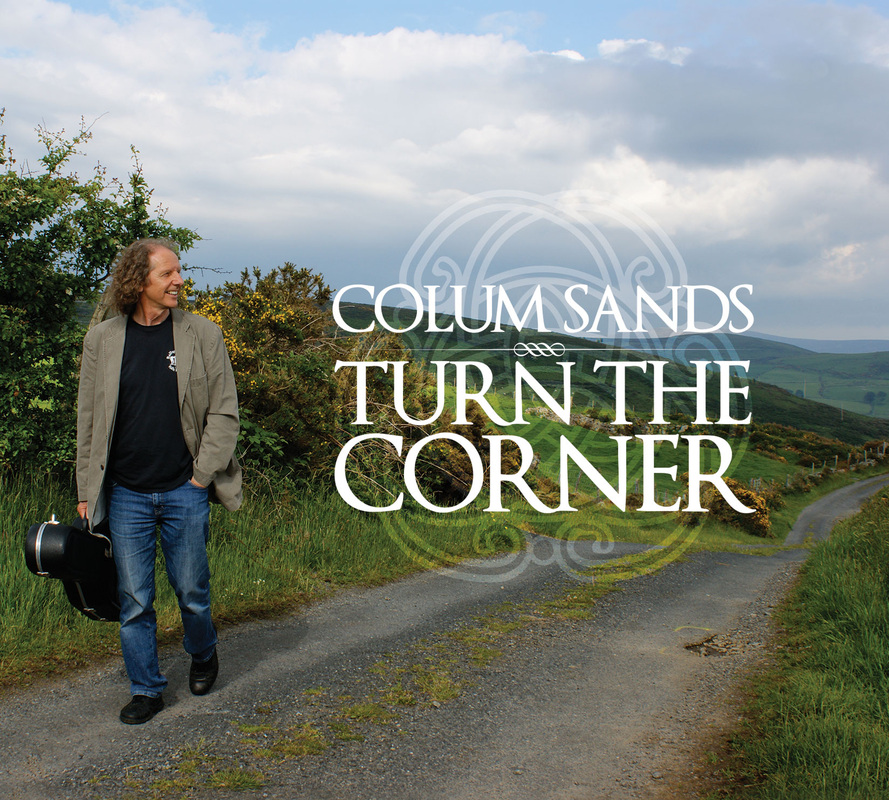
It was probably in 2006 when I first heard Colum Sands play at the National Folk Festival here in Australia. His carefully crafted and insightful song about the troubles in Ireland, Last House in Our Street, was a trigger to collect all of his albums. It was a good investment.

I wasn’t intending to go to the National this year as juggling five young children has made it a challenge. However, when I heard Colum on the radio in the weeks beforehand, promoting the festival, it suddenly became a much more attractive option.

My wife and I and three of our sons (12, 4 and 1) went along for the Friday. Hearing Colum play some songs from his new album along with Buskers and the funny song about the donkey was worth every cent of the ticket. My wife was also brave enough to meet Colum and get the newly purchased copy of Turn the Corner signed.

This post isn’t intended to be a report from our day at the festival, but more about the nature of this particular festival. Every year that I have attended, it has felt like stepping into Diagon Alley. A world where socially conscious people sit and listen to well-crafted music by everyone from the 10yr old with their first ukulele, to masters of the art. People are patient, generous and friendly.

Sometimes the odd ‘normal’ Canberran buys a ticket by accident and can be spotted wandering in a daze, like a muggle at a Quiddich match. I don’t know if this phenomena is common to all folk festivals, I haven’t been to many others but the ones I have been to don’t compare to the National. The slogan for the 50th anniversary, “5 days in a perfect world”, certainly rings true for me.

Despite living in Canberra since 1994, it was not until I was asked to help teach some morning Qi Gong exercises and coordinate a Chinese Dance display in 2006 that I discovered this incredible alternate universe. As one who has dabbled in the magic arts, I do wonder whether it is the concentration of so many people of a certain type, performers, organisers, volunteers and general attendees that creates the otherwise unexplainable vibe.

I’m sure that any one of the performers could put on a great concert, but I doubt if people would walk away with the same feeling that comes from spending some time at the National.

My son lost his Ukulele within the first 15 minutes of being at the festival. On Tuesday I had a phone call from the lost-property folks letting me know that it had been returned. As I said to my wife after my son noticed it was missing, “don’t worry, this is the National, these people don’t steal stuff”.

I should mention a few new performers that we enjoyed listening to. The harmonies provided by the three lads from The Young’uns were superb. It is great to have acts of this calibre come over from the UK and their selection of left-leaning songs was brilliant. I had to record my own version of John Ball, after hearing them perform it.

Co-cheòl also impressed.  Unfortunately the venue (Lyric) was probably half the size of the audience trying to get in. Fortunately my son and I had pre-positioned. With success on their Pozible campaign, they should have a debut album out in the near future. Multi-instrumentalists and with a solid choral background, their songs were heavenly to listen to.

We made sure to catch up with past festival favourites of ours, Cloudstreet and The Roaring Forties who put on a Cicely Fox Smith special that I was very pleased to sing along loudly to. The downside of a single day ticket is that you inevitably miss some performers, so it was a great disappointment to miss the Wheeze and Suck Band and also the Fiddle Chicks.

An important event that didn’t occur until the end of the festival was the presentation to Tony Eardley of the Alistair Hulett social justice songwriting award. You can see Tony’s excellent song “Sally Cross The Water” here. I first heard Tony sing Portugal Beach at the 2008 National and had it stuck in my head for 7 years until I finally met him in the Blue Mountains last year and purchased a copy of his album Desire Lines.

Maybe this feeling is unique to me, but I suspect others feel similarly about this event. It is only sad that every other day is now just one which isn’t spent at the National.

Blog Post · Folk Music · My Own Music

Women’s Day (Men stop being Bastards)

I wrote a song to express my sentiments on Women’s Day this year. I have included the lyrics below:

Women’s Day (by Daniel Kelly, 2016)

You pulled her hair in primary school,
Teased her ‘caus you thought it made you cool,
Laughed at her when she knew more than you

Girls can’t run, girls are weak,
Make them cry, don’t let them speak,
It’s really no surprise how we got here

Chorus:

It’s women’s day, it’s women’s day,
There has to be a better way,
To say the things still in my head
Let’s call it ‘Men don’t be Bastards’ day instead.

Took her on a date when you were fifteen,
Tried to squeeze her into your shallow dreams,
She was never gonna be the one you loved

It’s hard to know how to relate,
When all you’re ever taught is hate,
I wish I hadn’t lived with it so long

Chorus

When the children came, she stayed at home,
No women’s wage could pay those bills,
In a market made by men you’ll never win

They say you can always start again,
But only if you pay the price,
Your family, your dignitary and soul.

Chorus

More than a thousand years to prove,
The truth that we already knew,
There’s nothing that a woman cannot do

I wrote the song reflecting on the strong women I have known during my 39 years, and especially in relation to the treatment of women that I grew up observing as a child in Queensland during the 1980’s. Treatment which, to my shame, I emulated. It was not until I left home at seventeen and was exposed to the work of Tori Amos and a broader range of movies and television that I started to re-think the ideology that I had been raised in.

This blog post is about dissecting the origins of my behaviour and, hopefully, to let women know that there are men in society who value their contribution as complete people, rather than trophies, servants or sex toys. I’m also writing to encourage men to think about their attitudes towards women; where those attitudes come from and whether they are your own or imposed.

Why do we, Crucify ourselves
Every day, I crucify myself
Nothing I do is good enough for you
Crucify myself, Every day
And my heart is sick of being in chains
(crucify, from Little Earthquakes, Tori Amos)

The Little Earthquakes album, released by Tori Amos in 1992, had a magical property for me. It took an arrogant, selfish and condescending young male mind and rubbed my face in a thousand years of women’s suffering. I’m not ashamed to admit that I would often be reduced to a sobbing mess after listening properly to some of the songs on this album.

I’m not for a second suggesting that forcing every 17yr old male to listen to Tori Amos is going to solve the problem of gender imbalance, but for me it was a transcendent experience.

The social experiment, done by fanpage in Italy demonstrated with boys 6 to 11, that the tendency towards violence against women must be developed after this age. I’m not just talking about physical violence here, much of the violence against women is verbal and focused on how they look, how they feel and express feelings or how their interests and skills are trivial. Excluding someone from opportunity in society on the basis of their sex is violence.

The lyrics in the song above are all biographical. There were many beautiful young girls in my classes during school that I would tease relentlessly. Not playful teasing, but cruel verbal abuse. Even in my first years of university I would ridicule girls that social norms labelled overweight or unattractive. Girls who were considered attractive would be assumed to be sexually available and subject to a different form of abuse. How had society instilled such a shallow value system in me? I guess I could blame the fact that every storybook, television advertisement, movie and sitcom I was exposed to had the male hero exclusively pursuing a certain type of willing, beautiful, girl whose main purpose was to gush over said hero and fall helplessly into his arms. In my defence, I do not believe that very many young boys could resist an onslaught of this type if it is not countered by an alternate view in the adults and other children they are exposed to. This does not in any way excuse my behaviour or change the harm that was caused.

By the time I was finishing high-school, I ended up inviting a girl to the school formal that I had barely said five words to. My interest purely stemming from the fact that she looked like a singer who I had become infatuated with. As expected, things did not go well, and I was left confused when life did not imitate what I had seen on television and read in books.

I am angry at the way in which this attitude towards women sits at the core of Australian society. Unless a women chooses to forgo having children and is willing to endure harassment, it is unlikely that she will rise very far within her profession. This is evidenced by the average 18% pay gap [i] and means that when selecting top scientists, top doctors, top lawmakers, we are excluding between 5-15% of the available population, purely based on an antiquated idea that men are superior.

Other nations have moved on, providing in-workplace child care, flexible work arrangements and paternal leave. There is no logical reason for this absurd situation, yet in every field that women have fought to become part of, they have faced, and still face, a mountain of resistance.

If anything, celebrating Women’s Day in Australia is really just pointing to our failure. I encourage you to read the story of Rosmary Folett, the first female chief minister in the Australian Capital Territory. It is a story of triumph; her succeeding in doing a job she was highly qualified to do despite a wall of male ignorance and prejudice. However, the point is that she should not have had to, and how much better could she have done if time had not been wasted combating said prejudice? Enough is enough, it is time for balance to be returned.

He said you’re really an ugly girl
But I like the way you play
And I died
But I thanked him
Can you believe that
Sick, sick, holding on to his picture
Dressing up every day
I wanna smash the faces of those beautiful boys
Those Christian boys
So you can made me come
That doesn’t make you Jesus

(Precious Things, from Little Earthquakes, Tory Amos)

[i] https://en.wikipedia.org/wiki/Gender_pay_gap_in_Australia